

“A place belongs forever to whoever claims it hardest, remembers it most obsessively.”
Joan Didion, The White Album (1979).
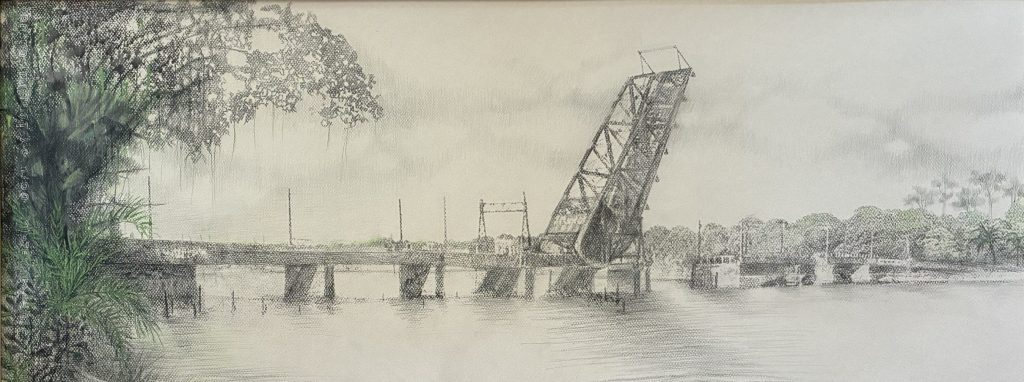
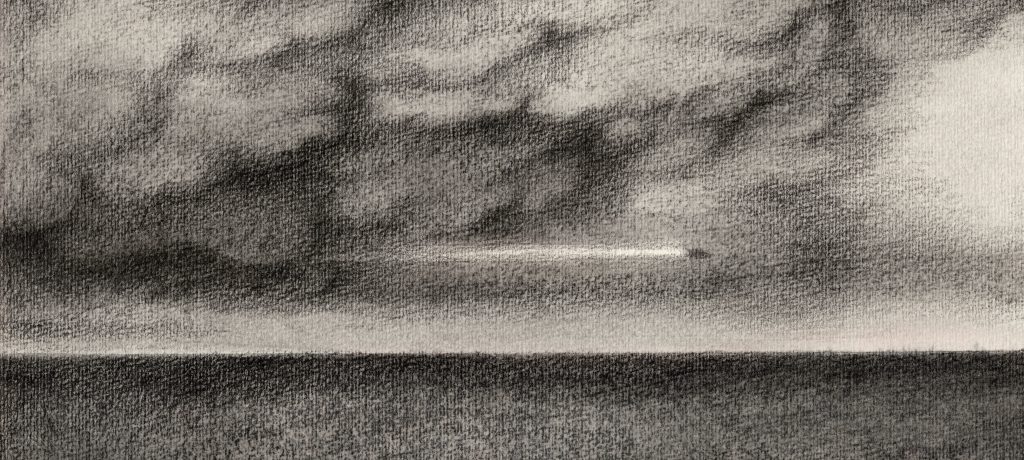
I began The Jet Lag Chronicles around 2010 as a series of small black colored-pencil drawings on paper exploring the elusive experience of inhabiting three continents simultaneously: North America, South America, and Europe. I eventually put the series aside as my creative practice took me in different directions. Only later did I begin to recognize that many of the figurative works I had created in the intervening years were still connected to it, even when I had not consciously thought of them as part of the same project.
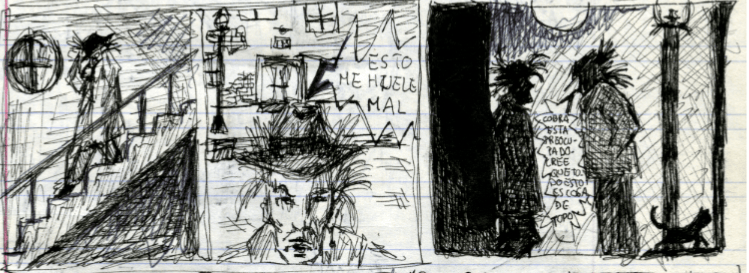
Looking further back, I also rediscovered a vignette I had created as a teenager in the mid-1980s, inspired by the aesthetics and sensibilities of postmodernism, post-punk, and the New Romantic movement. What initially seemed like separate experiments, belonging to different periods of my life, are now revealing themselves as fragments of a larger, interconnected narrative. I am beginning to bring these works together, establishing connections and continuities that were perhaps always there but that I had not yet recognized. They share a common visual language and, more importantly, the same narrative voice: one that has been observing, interpreting, and documenting a lived experience across time and geography.
Moving between these geographies, the central figure inhabits a shifting and often unsettled sense of home. The experience of living between places brings with it a persistent tension between attachment and displacement, belonging and estrangement, presence and absence. Through an introspective lens, the works explore the solitude, longing, and unexpected beauty of physical and emotional landscapes on either side of the Atlantic. Nature, the ocean, cities, and suburbs become recurring subjects, not simply as places observed in the present, but as landscapes shaped by memory, attachment, and the passage of time. Longing is not necessarily a desire to return to an idealized past; it is also a recognition that places left behind continue to inhabit the present. These landscapes exist in a peculiar state of suspension: constantly changing in the world, yet somehow motionless in the mind. Familiar places become distant, while distant places remain intimately present. The disorientation of travel and the experience of living between cultures create a geography of their own, where memory, imagination, and physical place are inseparable.
In The Jet Lag Chronicles, the central figure finds beauty even in desolate or overlooked landscapes because they are bound to her personal history. These places may appear ordinary to others, but they carry the emotional weight of a life lived across continents. The series is ultimately an exploration of memory, distance, longing, and the complex ways in which we continue to inhabit places long after we have left them.